Specifications:
Scientific Name: Cotinus obovatus
Common Name: American Green Smoke Tree, American Smoke Tree, Chittamwood
Family: Anacardaceae (Cashew, Sumac family) Native
Locale: North America Mature Size: Ranges from large shrub (more than 8 feet) to medium tree (25-40 feet)
Growth Rate: Slow USDA Hardiness Zones: 4-8
Detailed Characteristics:
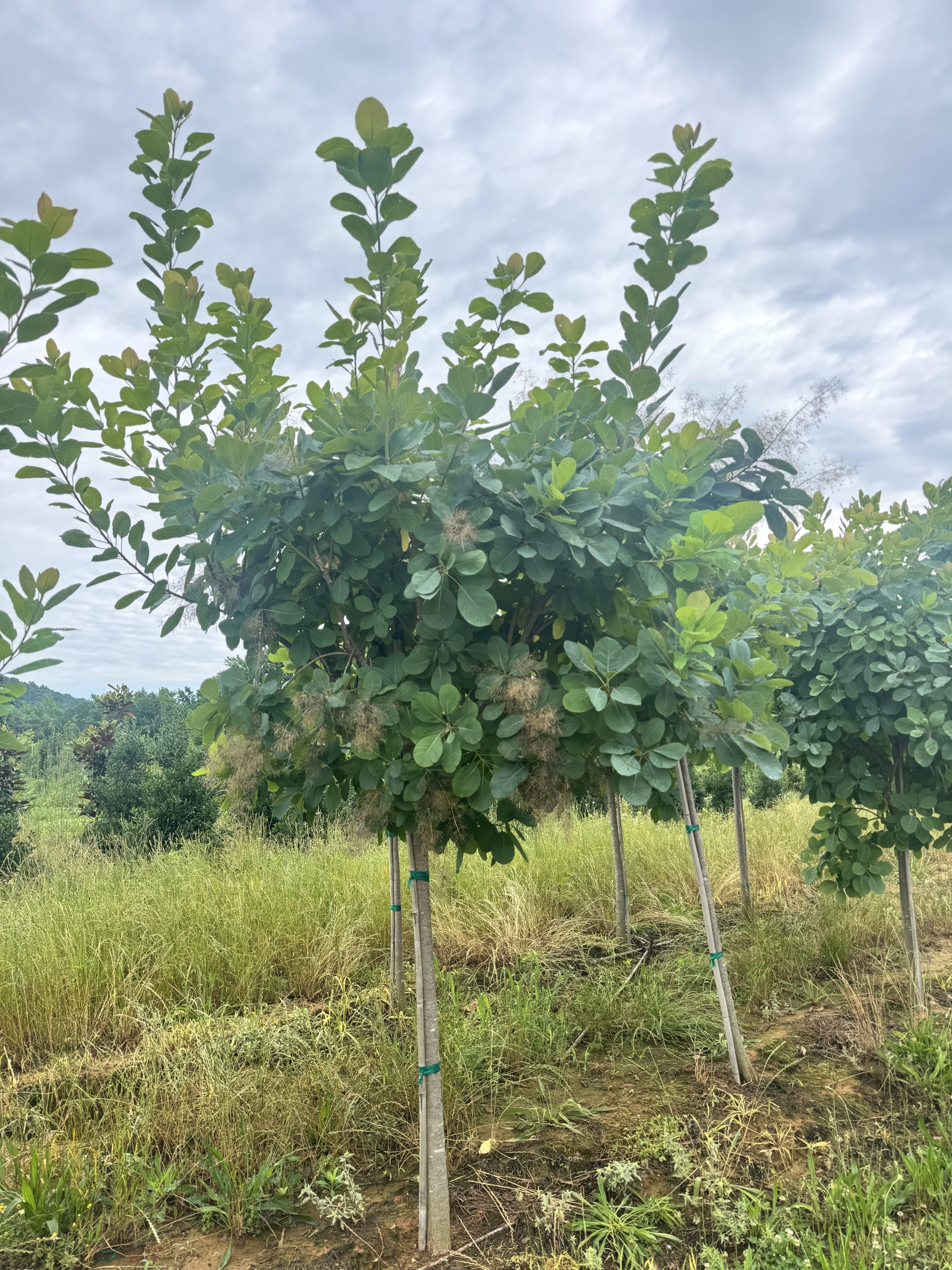
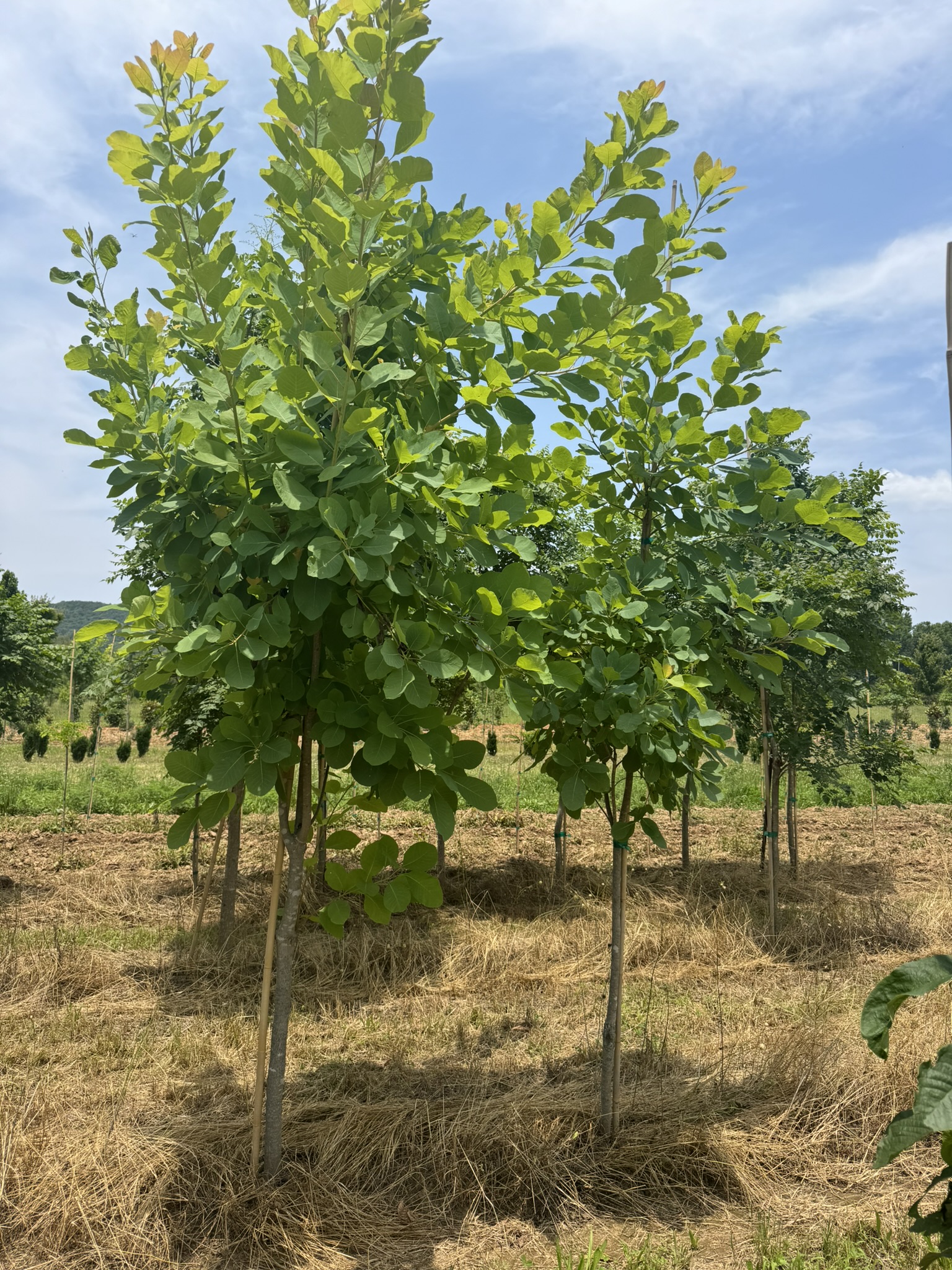
Growth Habit: Can be grown as a large shrub, compact tree, small tree, or medium tree Warty brown-gray bark with a fish-scaled pattern adds winter interest
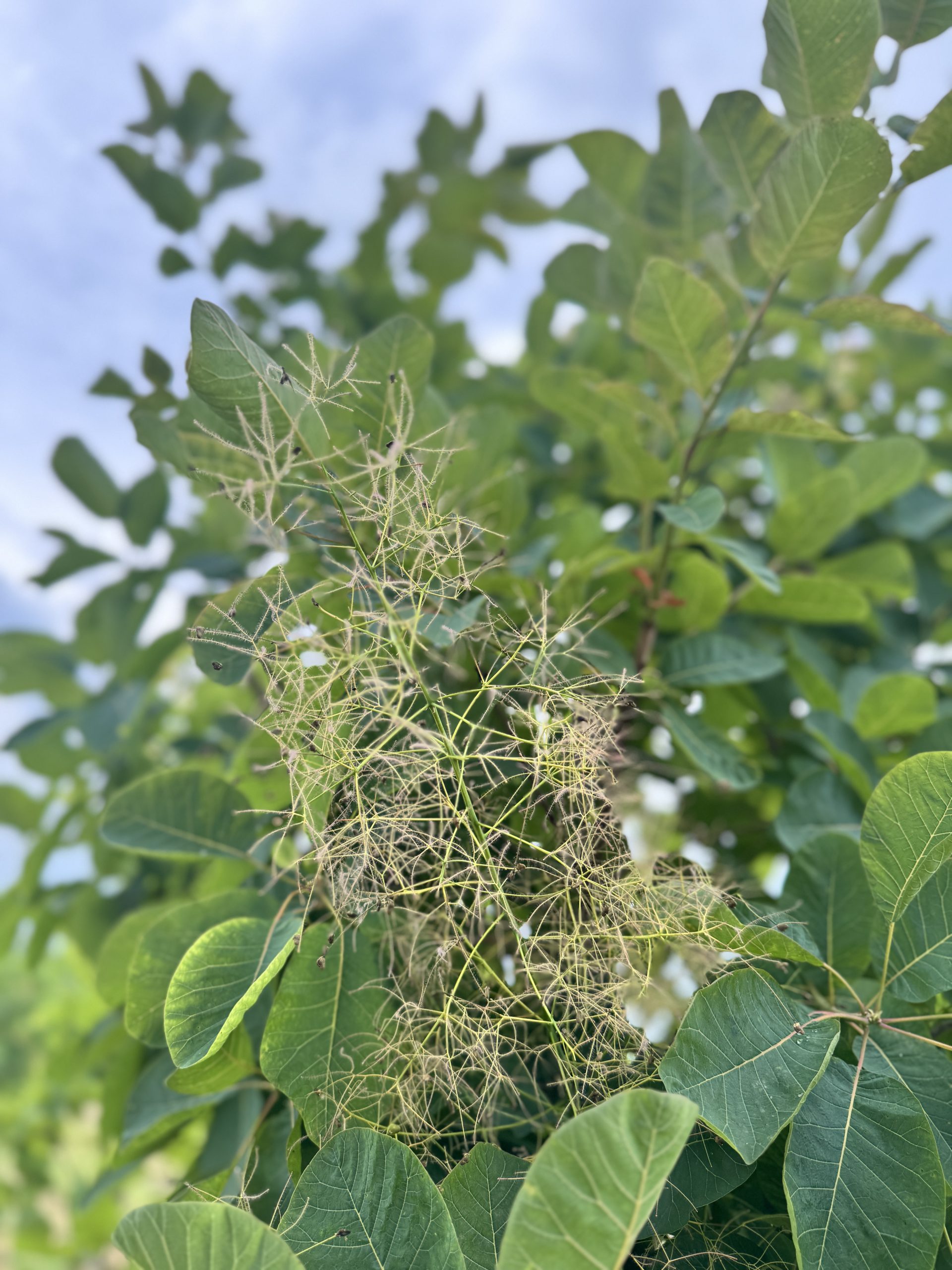
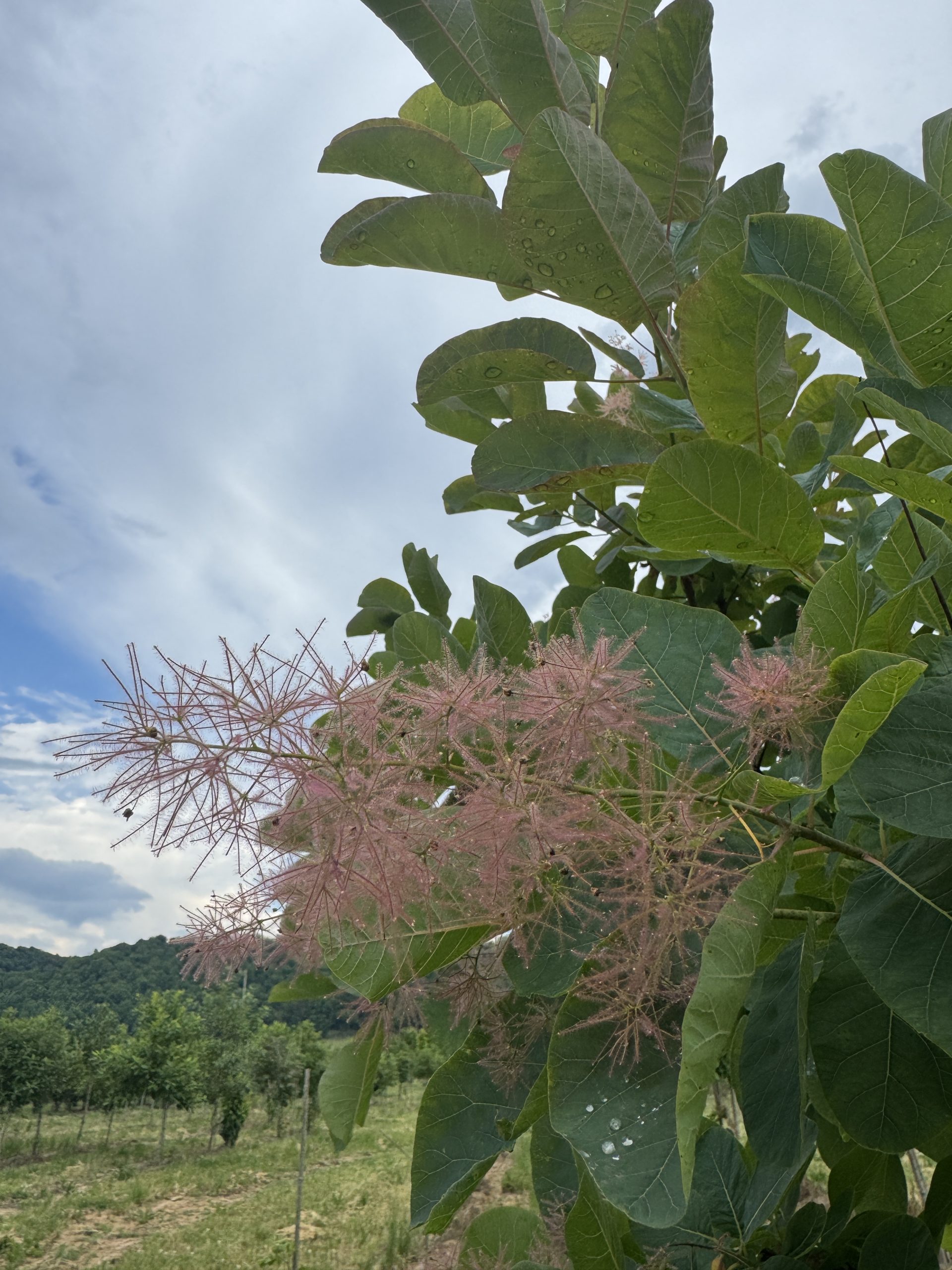
Foliage: Spring leaves are silky pink, turning bluish to dark green in summer Fall leaves are vibrant shades of red, orange, yellow, and purple Flowers: Inconspicuous green-yellow clusters, 6-10 inches long Billowy hairs turn smoky pink to pink-purple in summer, creating a “smoke” effect
Bark: Warty brown-gray bark with a fish-scaled pattern Adds visual interest in winter
Seasonal Interest:
Spring: Silky pink emerging leaves
Summer: Smoky pink to pink-purple flower clusters
Fall: Vibrant red, orange, yellow, and purple foliage
Winter: Warty brown-gray bark with a fish-scaled pattern
Care Instructions:
Light Requirements: Thrives in full sun to partial shade
Soil Needs: Prefers alkaline, well-drained soil Tolerates a wide range of soils, including clay and shallow rocky soil
Watering: Drought-tolerant once established Prefers moist conditions but avoid overwatering
Fertilization: Avoid over-fertilizing Prefers infertile loam soil
Pruning: American Smoke Tree Can be pruned to maintain shape and size
Landscaping Uses:
Specimen Tree: Ideal focal point for gardens and landscapes
Mass Planting: Effective in groups for a dramatic effect
Screen/Privacy: Can be used to create privacy screens or barriers
Naturalized Areas: American Smoke Tree is Suitable for meadows, naturalized gardens, and slopes