$318.00 – $504.00Price range: $318.00 through $504.00
| Size | Price | Quantity | |
|---|---|---|---|
| 2 in B&B | $318.00 | ||
| 2.5 in B&B | $371.00 | ||
| 3 in B&B | $450.00 | ||
| 3.5 in B&B | $504.00 |
We are located at: 3600 Valley View Rd. | Cookeville, Tennessee 38506
Call for a freight quote. The quote comes from the carriers.
Enter your order details into our freight calculator to estimate your shipping costs.

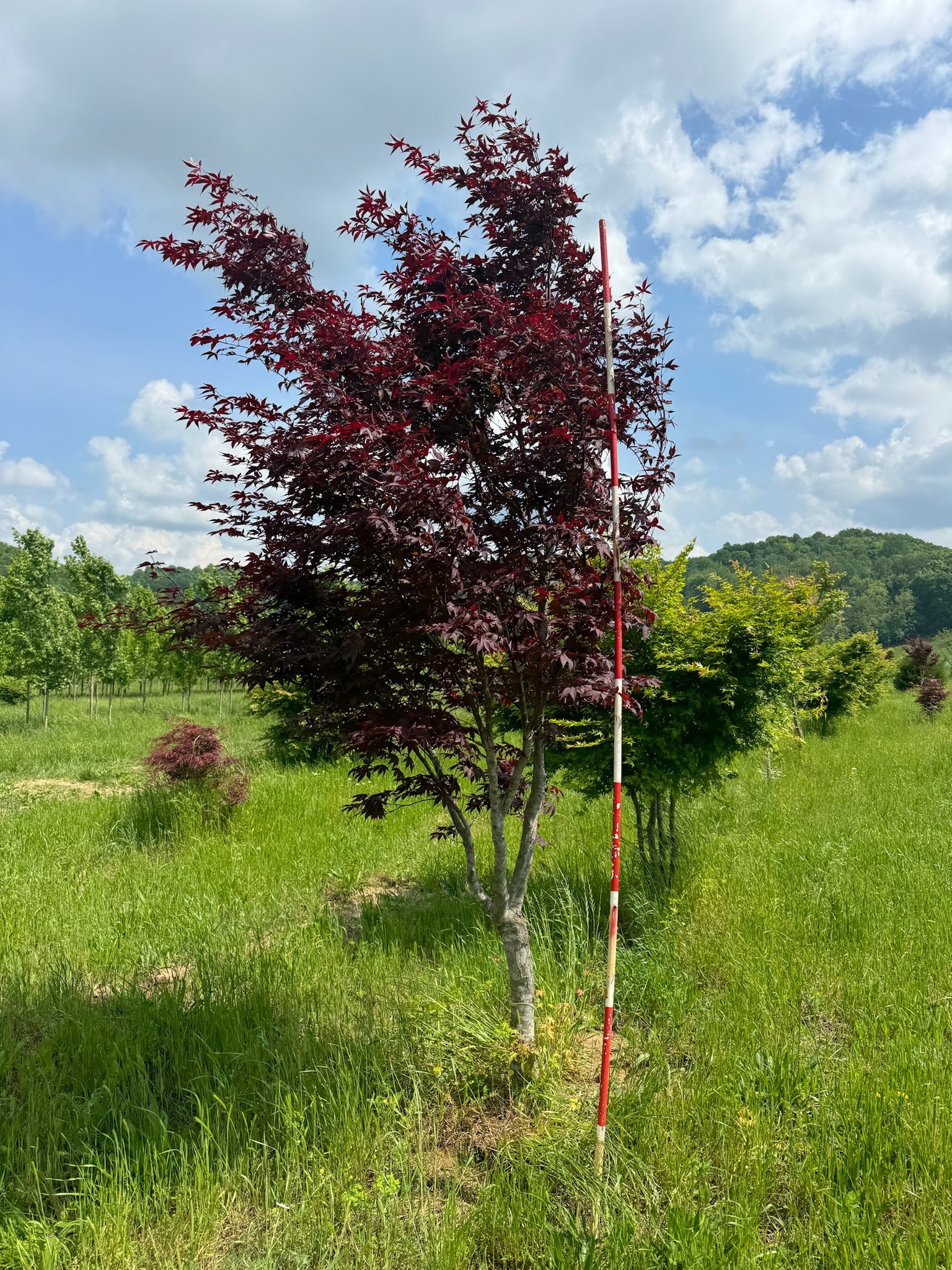
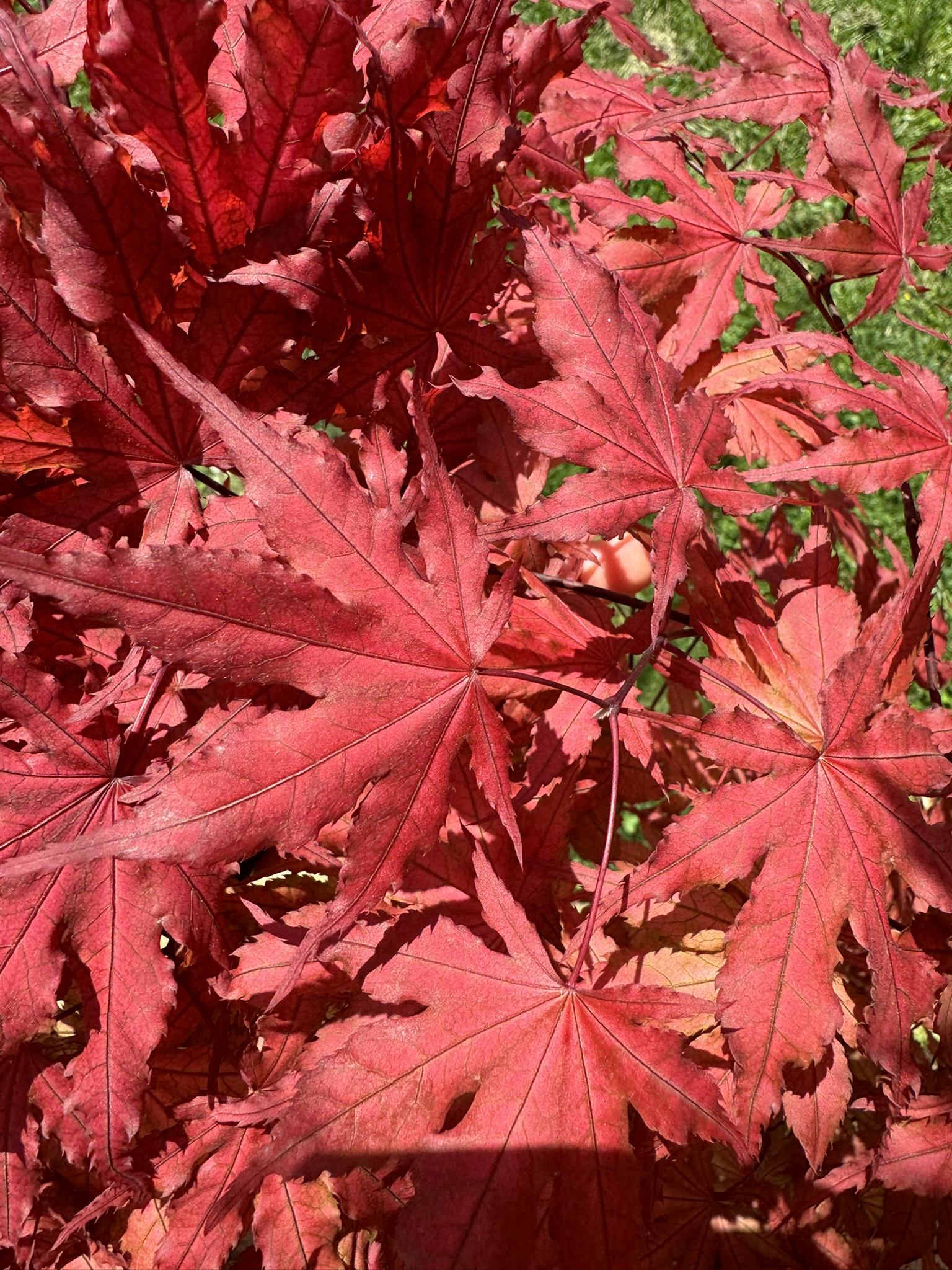
Bloodgood Japanese Maple (Acer palmatum ‘Bloodgood’) is the standard for comparison among purple-leaf, upright Japanese maples. Its large, deep red-purple leaves hold their color well, then turn an excellent red in autumn. This slow-growing small tree matures at about 20 feet tall and wide and is hardy in USDA Zones 5 to 8.
Bloodgood is the standard for comparison among the purple-leaf, upright Japanese maples, and it is grown both as a single-trunk and a multi-stem tree. Its large, deep red-purple leaves make it one of the best for holding deep reddish-purple color, and they turn an excellent red in autumn. New leaves emerge a glowing burgundy with the first flush of spring, then settle to a mellow dark burgundy from late spring through summer. It is among the most cold hardy purple-leaf types and is hardy in USDA Zones 5 to 8. Slow-growing, it matures as a small tree about 20 feet tall and 20 feet wide. In winter, its smooth main trunk and tapering branches stand out after the scarlet leaves drop, and first-year stems stay dark burgundy all winter. Use it as a focal point specimen, a patio or accent tree, along walkways, or in a container. Bright light brings out the best leaf color, but too much direct summer sun can damage and discolor the foliage, so give it part sun to light shade.
Wholesale buyers get Tennessee field-grown balled-and-burlapped Bloodgood Japanese maple at real landscape caliper rather than container whips. Freight is quoted from Cookeville, or pickup is at 3600 Valley View Rd, Cookeville, TN 38506. A truckload can mix this tree with other plants. Call (931) 526-7682 or email sales@cherrycreeknursery.com.
| Size | Heavy |
|---|
Bloodgood does best with bright light and some shade, meaning part sun to light shade. Bright light brings out the deepest burgundy leaf color, but too much direct summer sun can scorch and discolor the foliage, so afternoon shade helps in hot spots. It holds its dark burgundy leaves better than most purple-leaf Japanese maples, even as summer heat sets in. Pair the right light with moist, well-drained, slightly acidic soil.
Bloodgood is a small tree that matures in the 15 to 20 ft range. It grows upright at first and becomes broad-topped with age. Its large, deep red-purple leaves turn an excellent red in fall, and it's one of the most cold-hardy purple-leaf Japanese maples. It works as a single-trunk tree or a multi-stem specimen.
To a point, yes. Bloodgood is already a small tree, and it grows well in large containers, as a patio tree, and even as bonsai, which all keep it compact. Japanese maples need little pruning. Once a good branch framework is set, just remove dead, damaged or crossing wood and keep the natural layered shape. Pinching soft new shoots stops their growth until the next flush, which is a gentle way to limit size. Don't cut back the trunk or large limbs to force a big tree smaller, because that leaves weak, crowded regrowth. Prune in late fall to midwinter, since spring and summer cuts bleed heavily.
The most common problem is leaf scorch. Too much hot, direct summer sun discolors the burgundy leaves, especially in dry soil. Because it leafs out early, late spring frosts can damage new growth, and in high-pH soil the leaves can yellow from chlorosis. Insects include aphids, scale, mites, borers, leaf miners and caterpillars. Diseases include anthracnose, powdery mildew, Verticillium wilt, canker and tar spot. Bark can sunscald, roots can circle in containers or tight beds, and ice or snow can break branches. Its salt tolerance is low, and its drought tolerance is only moderate. On the plus side, it is notably cold- and heat-tolerant for a purple-leaf maple.
Scientific Name | Acer palmatum ‘Bloodgood’ |
Mature Height | |
Mature Width | |
Growth Rate | |
Fall Color | |
Leaf Color | |
Sun | |
Soil | |
Water | |
Type | |
Common Name(s) | Bloodgood Japanese Maple |
Growing Zone(s) |