Red Buckeye 20′×20′

Aesculus pavia

Call

Available Options

SizePriceQuantity 
2 in B&BCall

Shipping Information

Distance (in Miles)
Weight (in LBs)
Calculate

We are located at: 3600 Valley View Rd. | Cookeville, Tennessee 38506

Call for a freight quote. The quote comes from the carriers. 

Enter your order details into our freight calculator to estimate your shipping costs. 

tree-pricing-35000

Description

At a glance

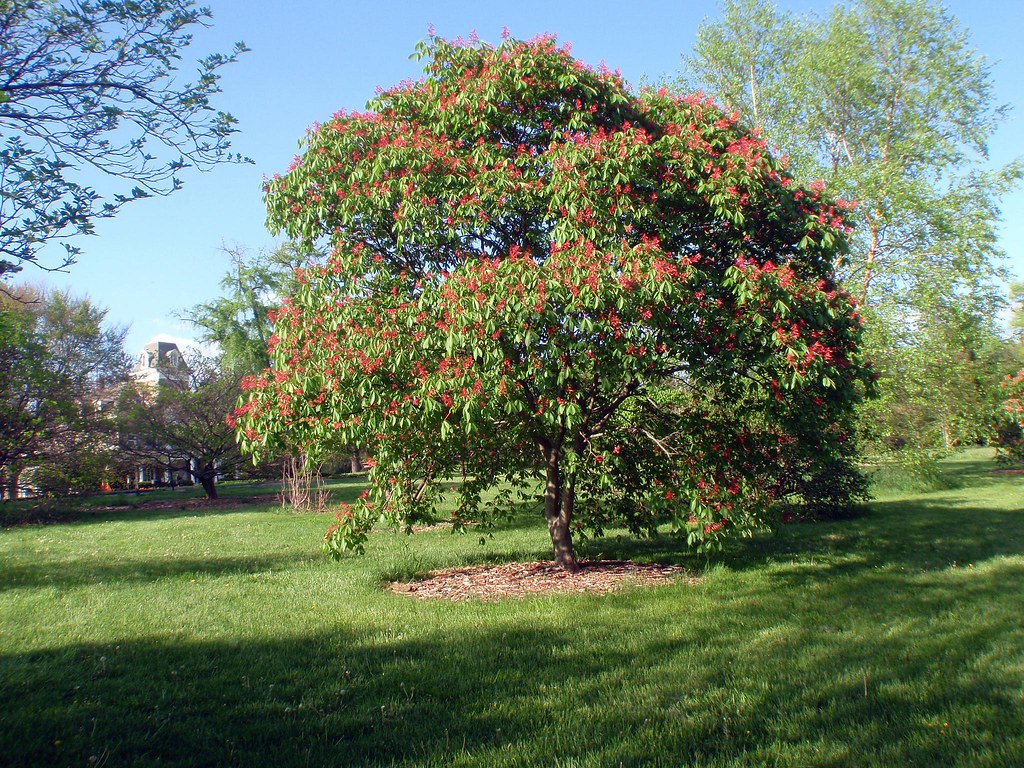
Red buckeye, Aesculus pavia, is a small native tree of woodlands with a rounded habit. It grows to 20 feet tall and 20 feet wide and is hardy in USDA zones 4 through 8. It is a fine plant for naturalizing in moist soils, and it suits acidic soil.

Why plant Red Buckeye

Red Buckeye bears rich red flowers above the foliage in April and May, and the clusters last about a month. Ruby-throated hummingbirds feed from the flowers, which open about when the birds return in spring, and bees and butterflies feed on the nectar too. Its brilliant dark green leaves are among the handsomest of the native buckeyes. It can also be planted under power lines. When grouped or massed in light shade provided by pines, the effect can be spectacular.

Why Cherry Creek

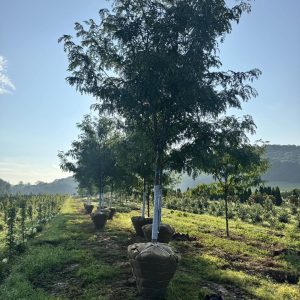
Wholesale buyers get Tennessee field-grown balled-and-burlapped red buckeye at real landscape caliper rather than container whips. Freight is quoted from Cookeville, or pickup is at 3600 Valley View Rd, Cookeville, TN 38506. A truckload can mix this tree with other plants. Call (931) 526-7682 or email sales@cherrycreeknursery.com.

Additional information

Size

2 in B&B

FAQ

How tall does a red buckeye tree typically grow?

About 20 ft tall and 20 ft wide.

What are the pros and cons of growing a red buckeye tree?

Pros: brilliant dark green leaves, among the handsomest of the native buckeyes, and rich red flowers above the foliage in April and May. Con: it hates dry soil, where it tends to scorch or drop its leaves by August or September.

Where is the best place to plant a red buckeye plant?

In light shade, such as under pines, and in moist soil. Grouped or massed there, the effect can be spectacular.

What are the common problems with red buckeye?

Leaf scorch and early leaf drop in dry soil, often by August or September.

Seasonal Interest

  • Spring: Clusters of red flowers bloom, attracting pollinators.
  • Summer: Lush green leaves provide deep, cooling shade.
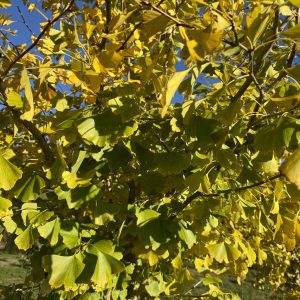
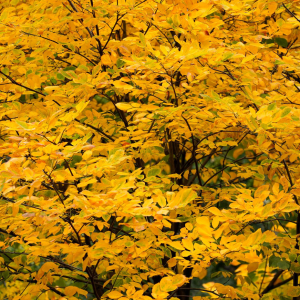
  • Fall: Foliage turns golden-yellow, creating a stunning autumn display.
  • Winter: Peeling bark and architectural form provide subtle winter beauty.
Scientific Name
Aesculus pavia
Mature Height
Mature Width
Growth Rate
Flower Color
Leaf Color
Sun
Soil
Water
Type
Common Name(s)
Firecracker Plant, Scarlet Buckeye
Growing Zone(s)
USDA Hardiness Zones 4–8 shown on map