Specifications
| Attribute |
Value |
| Mature Height |
3-6 feet (up to 8 feet) |
| Mature Width |
3-6 feet |
| Growth Rate |
Moderate |
| Flower Color |
Pink to lavender |
| Berry Color |
Bright purple |
| Foliage Color |
Green (yellow in fall) |
| Growing Zone(s) |
6-10 |
| Sun Exposure |
Full sun to part shade |
| Soil Type |
Well-drained, moist, rich in organic matter; tolerates clay and sandy |
| Water Needs |
Moderate; drought-tolerant once established |
| Native Range |
Southeastern United States |
Detailed Characteristics
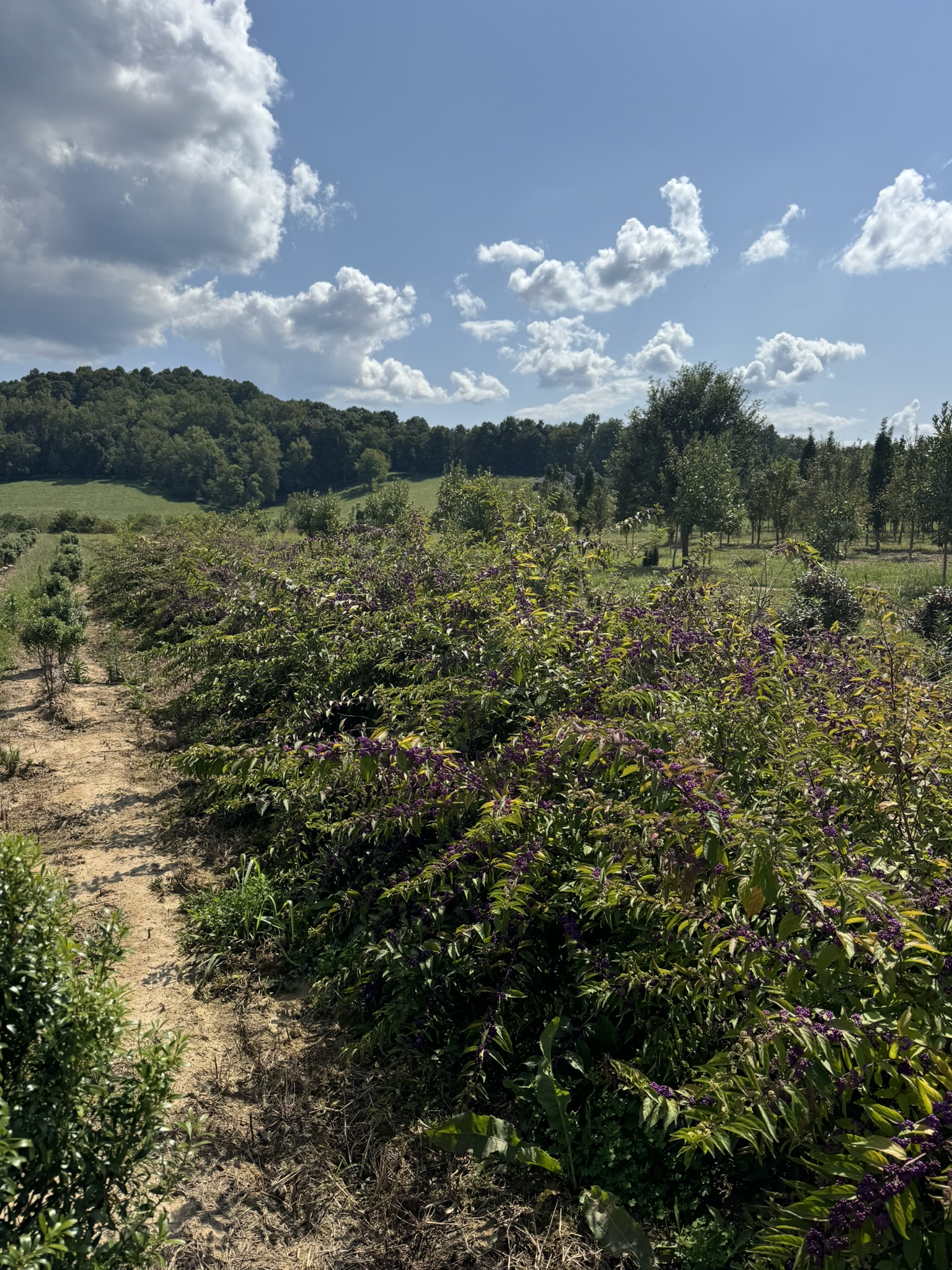
American Beautyberry is a deciduous shrub in the Lamiaceae (Mint) family, with an open, arching form that can reach 3-8 feet tall and wide depending on conditions. Its medium-green, ovate to elliptic leaves are 2-6 inches long, slightly fuzzy, and arranged oppositely along the stems. In summer, inconspicuous but fragrant pinkish-lavender flowers bloom in cymes at the leaf axils, drawing pollinators. These give way to dense clusters of glossy, magenta-purple drupes (berries) that wrap around the branches in fall, each about 1/8 inch in diameter. The berries are a key attraction, persisting after leaf drop and providing food for over 40 bird species. The plant is adaptable but prefers moist, well-drained soils rich in organic matter, though it tolerates poorer conditions. It’s generally pest-free but may occasionally face leaf spot or stem cankers in overly wet areas.
Care Instructions
Plant in fall or winter for best establishment. Choose a site with full sun to partial shade and well-drained soil amended with organic matter. Water regularly during the first growing season to establish roots, then reduce to moderate levels as it becomes drought-tolerant. Mulch around the base to retain moisture and suppress weeds. Prune in late winter or early spring to remove old wood and shape the plant, promoting denser growth and better berry production—cut back by up to one-third if needed. Fertilize sparingly with a balanced, slow-release product in spring if soil is poor. Monitor for occasional pests like aphids, but intervention is rarely necessary. For propagation, collect seeds from ripe berries or take softwood cuttings in summer.