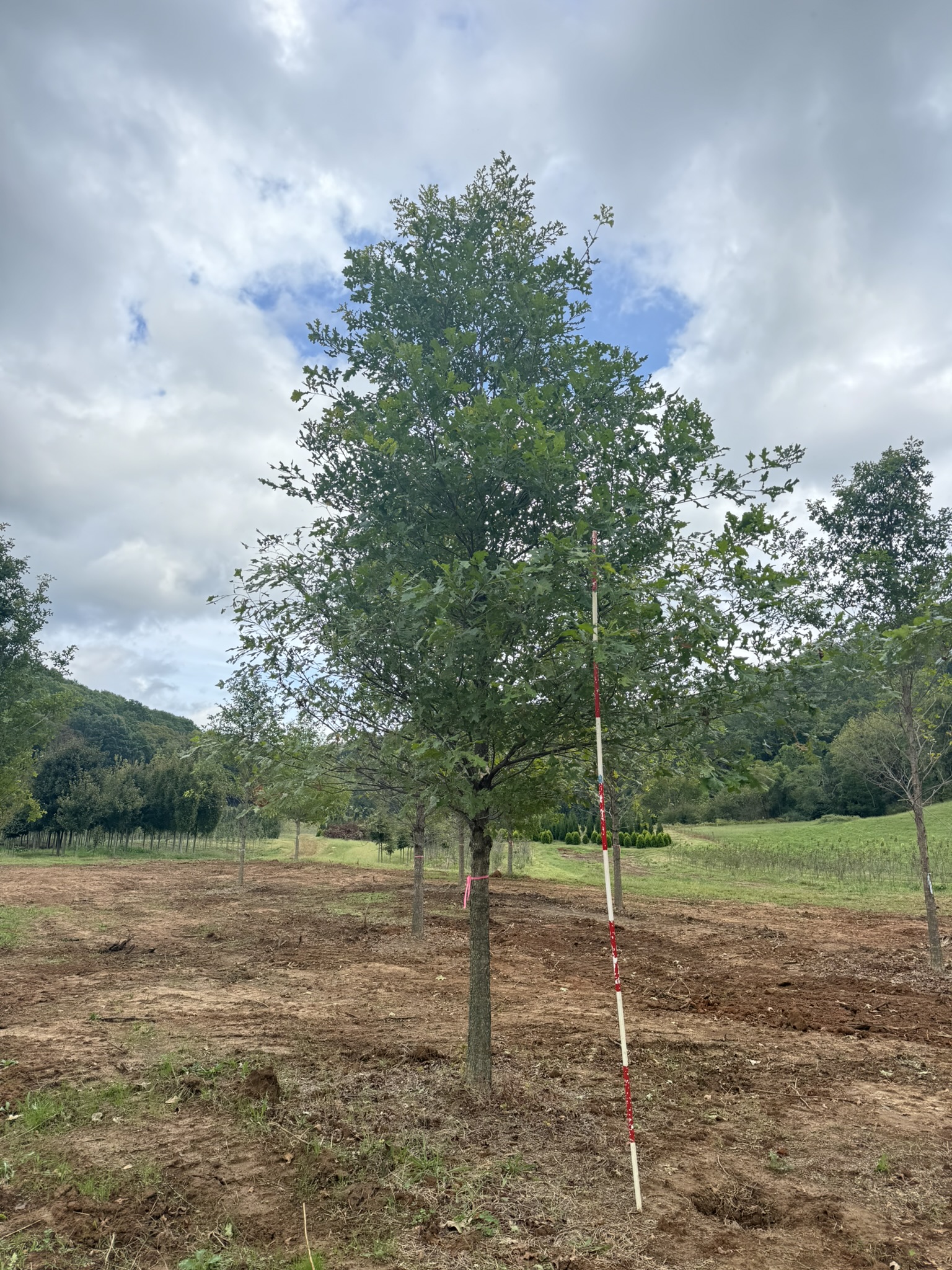
Overcup Oak 50′×50′

Quercus lyrata

$500.00

Available Options

SizePriceQuantity 
5 in B&B$500.00

Shipping Information

Distance (in Miles)
Weight (in LBs)
Calculate

We are located at: 3600 Valley View Rd. | Cookeville, Tennessee 38506

Call for a freight quote. The quote comes from the carriers. 

Enter your order details into our freight calculator to estimate your shipping costs. 

tree-pricing-35000

Description

At a glance

Overcup oak (Quercus lyrata) is a deciduous oak in the white oak group, native to central and southeast North America. It grows fast and is rounded at maturity, with lustrous dark green leaves that turn yellow-brown in autumn. It takes full sun and is hardy in USDA zones 5 through 9. Its name comes from the bur-like acorn cup that typically encloses two-thirds to almost all of the nut.

Why plant Overcup

Overcup oak tolerates wet, poorly drained soils and occasional flooding, yet it also grows well on sites with better drainage and tolerates dry ground. It is readily transplanted and has a uniform growth habit, and its branches are upturned. It is a great tree for urban use, and as with most native oaks, it is a high-value wildlife plant that is mildly resistant to deer browsing. Maintenance is low, and mature trees carry slightly shaggy gray to grayish-brown bark.

Why Cherry Creek

Wholesale buyers looking for overcup oak for sale get Tennessee field-grown B&B overcup oak here, real landscape caliper, not container whips. Freight is quoted from Cookeville (or pick up at 3600 Valley View Rd, Cookeville, TN 38506). Truckload mixes are welcome. Call or text (931) 526-7682 or email sales@cherrycreeknursery.com.

Additional information

Size

Heavy

FAQ

What are the downsides of overcup oak?

Overcup oak (Quercus lyrata) is overlooked, and some people scorn it because the acorns are large and chunky, with the cap covering most of the nut. It may decline when the soil becomes compacted or when the soil around the roots no longer supports the fungi the tree needs. Salt tolerance is low to moderate. For a street or urban planting that may be wet or dry, those are the limits named, and the acorns are part of the tree.

Do deer eat overcup oaks?

Deer love the acorns of white oaks. Overcup oak (Quercus lyrata) is in that group, so the acorns are what they are after. It is still specified for street and urban sites that may be wet or dry.

How big does an overcup oak get?

Overcup oak (Quercus lyrata) grows 40 to 60 feet high and wide. This page uses about 50 feet by 50 feet. Plan a street or urban planting that may be wet or dry for that mature size.

What are the differences between overcup oak and white oak?

The size listed on this site is the difference. Overcup oak (Quercus lyrata) is about 50 feet by 50 feet. White oak (Quercus alba) is listed at 80 feet tall and 70 feet wide. Overcup is the smaller tree for a street or urban site that may be wet or dry.

  • Spring: New leaves emerge, providing a fresh green appearance.
  • Summer: Dense foliage offers ample shade and visual appeal.
  • Fall: Leaves turn to vibrant shades of yellow, brown, or red, creating a striking autumn display.
  • Winter: The tree’s strong structure and bark provide interest during the dormant season.
Scientific Name
Quercus lyrata
Mature Height
Mature Width
Growth Rate
Fall Color
Leaf Color
Sun
Soil
Water
Type
Characteristics
Common Name(s)
overcup oak
Growing Zone(s)
USDA Hardiness Zones 5–9 shown on map