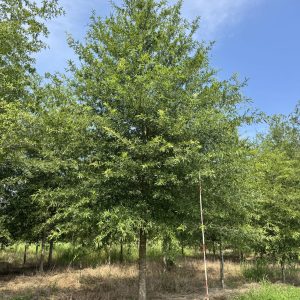
The Kentucky Coffeetree is extremely low-maintenance and thrives in various conditions.
- Sunlight: Requires full sun for best growth and structure.
- Soil: Prefers moist, well-drained soil but adapts to clay, loam, and rocky soils.
- Watering: Water regularly during early establishment; once mature, it is highly drought-tolerant.
- Fertilization: Generally not required; can benefit from a slow-release fertilizer in early spring.
- Pruning: Minimal pruning needed; remove deadwood in late winter or early spring to enhance shape.
- Pest/Disease Resistance: Highly resistant to pests, diseases, and urban stressors, making it an ideal city tree.
The Kentucky Coffeetree is an exceptional shade tree for large open spaces, streetscapes, and naturalized areas. Its high drought tolerance and resistance to urban pollution make it well-suited for city parks, boulevards, and public spaces where other trees may struggle. Its bold, coarse-textured branching and winter silhouette give it year-round character, even when the leaves have fallen.
Female trees produce ornamental seed pods, adding a natural sculptural element to winter landscapes. However, for mess-free landscaping, male trees are often preferred. Whether planted as a specimen tree, in rows for street plantings, or as part of a mixed native woodland, the Kentucky Coffeetree offers beauty, resilience, and a unique architectural form.